The Pacific Ocean is heating up again — and this time, the signal is unusually strong.
According to the latest update from the World Meteorological Organization (WMO), the 2026 El Niño event is continuing to strengthen and is expected to peak around December 2026.
The forecast is particularly significant: the Niño 3.4 sea-surface temperature anomaly is expected to reach approximately +3.7°C during October–December 2026, potentially exceeding the previous observed record of +2.6°C in 2015–2016. WMO also forecasts a near-100% likelihood that El Niño will persist through February 2027.
For people living in island and coastal regions, this is more than a climate headline.
It is a reminder that buildings need to be designed for the environment they actually face.
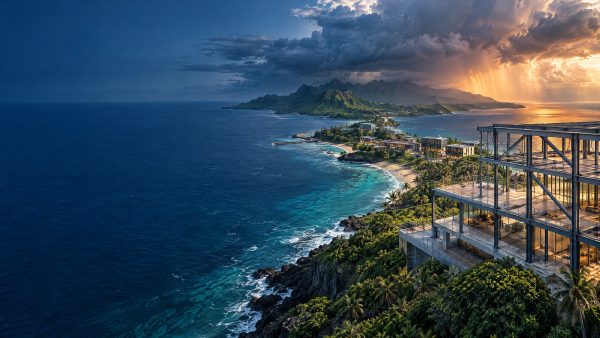
Strong El Niño 2026: Why Climate Resilience Matters for Island and Coastal Buildings
1. Why Is the 2026 El Niño Different?
El Niño is a natural climate phenomenon associated with unusually warm sea-surface temperatures in the central and eastern tropical Pacific.
But the current event is attracting particular attention because of its strength.
WMO reports that the Niño 3.4 index increased from around +1.6°C above normal in June 2026 to +2.5°C in August, with the seasonal average forecast to reach approximately +3.7°C during October–December 2026.
The consequences are not limited to the Pacific Ocean.
Strong El Niño events can shift large-scale rainfall and temperature patterns around the world, increasing the likelihood of:
- Extreme heat
- Heavy rainfall
- Flooding
- Drought
- Changing storm patterns
- Coastal environmental stress
- Greater pressure on infrastructure
Importantly, El Niño does not mean that every island will automatically experience more hurricanes or cyclones. Its influence varies significantly by region.
But it does mean one thing very clearly:
Climate conditions are becoming a more important consideration in building design.
2. Why Island Buildings Need More Attention
Island and coastal buildings are exposed to a combination of environmental conditions that inland buildings may not face to the same degree.
Think about a typical coastal project.
It may experience:
Strong winds + high humidity + salt-laden air + heavy rainfall + intense sunlight + sea spray
And these factors often work together.
A building located close to the ocean does not only need to withstand structural loads.
It also needs to maintain its performance over years of exposure.
This creates two major challenges for steel buildings:
Wind-proofing
The structural system must be designed to transfer wind loads safely from the roof and walls through beams and columns and ultimately into the foundation.
Anti-corrosion
Steel components, connections and fasteners must be properly protected against moisture, salt spray and marine exposure.
For an island project, these two requirements should not be treated as optional upgrades.
They should be part of the design thinking from the beginning.
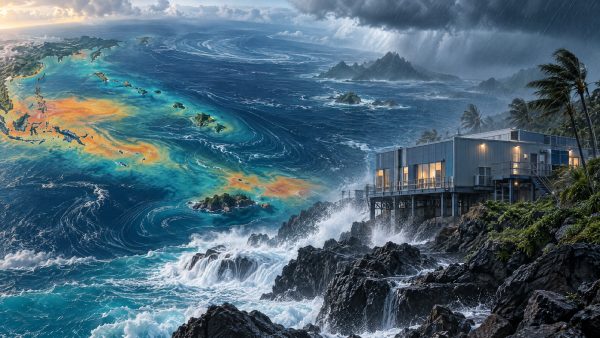
A changing climate means island buildings must be prepared for changing environmental conditions.
When people think about extreme weather, they usually think about wind.
But for steel structures in coastal areas, corrosion can be just as important.
Salt particles carried by marine air can settle on exposed steel surfaces and connection components.
Combined with:
- High humidity
- Rainfall
- Condensation
- Sea spray
- High temperatures
the environment can become particularly aggressive to unprotected steel.
And corrosion is not always obvious at first.
A steel frame may look strong from the outside while corrosion gradually affects smaller components such as:
- Bolts
- Anchor bolts
- Connection plates
- Brackets
- Fasteners
- Welded areas
This is why anti-corrosion protection should not focus only on the main steel frame.
Every component matters.
4. Why Connections Matter During Strong Winds
A common misunderstanding is that wind resistance is simply about having “thicker steel.”
It is not that simple.
A building behaves as a complete structural system.
During strong winds, forces travel through multiple parts of the building:
Roof → Purlins → Beams → Columns → Connections → Anchor Bolts → Foundation
If one part of this load-transfer path is poorly designed, the performance of the entire system can be affected.
That is why wind-proofing requires attention to:
- Structural design
- Steel member sizing
- Roof design
- Connection details
- High-strength bolts
- Anchor bolts
- Bracing systems
- Foundation anchoring
For island and coastal projects, the question should therefore not simply be:
“How strong is the steel?”
A better question is:
“How does the entire building transfer wind loads safely to the foundation?”
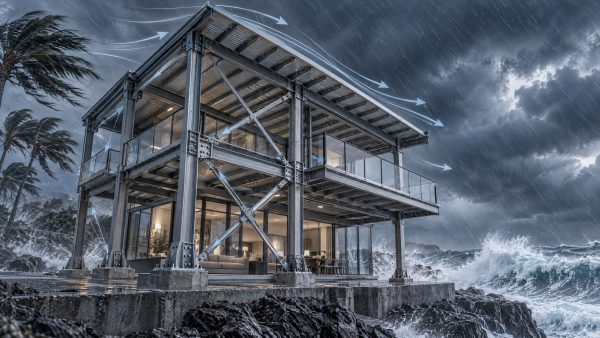
Wind-proofing is a complete structural system — from the roof to the foundation.
5. Why Prefabricated Steel Structures Are a Strong Choice for Island Projects
This is where prefabricated steel structures can provide a practical advantage.
Unlike traditional construction methods that depend heavily on extensive on-site fabrication, prefabricated steel buildings allow major structural components to be manufactured and inspected in a controlled factory environment.
For island projects, this can be especially valuable.
1. Controlled Manufacturing
Steel members and connection components can be manufactured according to engineering drawings and project specifications.
2. Faster Installation
A significant amount of fabrication can be completed before the materials arrive at the project site.
This can reduce the amount of on-site work required.
3. Better Quality Control
Factory inspection allows manufacturers to check:
- Material specifications
- Dimensions
- Welding
- Bolt specifications
- Surface treatment
- Quantity
- Packaging
before shipment.
Steel structures can be customized for:
- Villas
- Resorts
- Staff accommodation
- Warehouses
- Public buildings
- Commercial buildings
- Residential projects
5. Suitable for Remote Locations
For island projects where construction resources may be limited, prefabrication can help make logistics and installation more manageable.
6. Anti-Corrosion Protection: Small Components, Big Responsibility
For coastal projects, protecting the steel structure starts with understanding the environment.
Different projects may require different levels of corrosion protection depending on:
- Distance from the sea
- Salt exposure
- Humidity
- Rainfall
- Building location
- Expected service life
- Maintenance conditions
At Island Steel, anti-corrosion protection can include appropriate surface treatment systems such as galvanizing, spray coating and Dacromet treatment, depending on the component and project requirements.
For example, high-strength bolts and anchor bolts deserve particular attention because they are critical connection components.
A building may have thousands of steel components.
But the size of a component does not determine its importance.
A small bolt can have a very large responsibility.
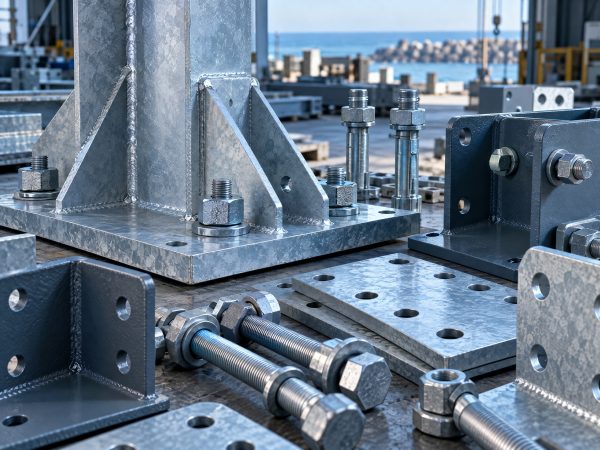
In coastal environments, corrosion protection must extend from the main frame to the smallest connection components.
7. Climate Resilience Starts Before the Container Leaves China
For a remote island project, fixing a problem after shipment can be expensive.
Imagine discovering that several connection components are missing after the container has already arrived on an island.
The problem is no longer simply a factory issue.
It may involve:
Additional production → international shipping → customs → inland transportation → site delay
That is why quality control before shipment is extremely important.
At Island Steel, our inspection process can include:
Material Verification → Product Inspection → Batch Sampling → Quantity Checking → Surface Treatment Inspection → Packaging → Shipment
The goal is simple:
Identify problems before the products leave the factory — not after they arrive at the construction site.
8. El Niño Is a Reminder: Build for the Destination, Not Just the Drawing
A building design should never exist independently from its environment.
A steel structure designed for an inland location may face very different conditions from one built beside the ocean.
For island and coastal projects, engineers and project owners should consider questions such as:
What is the local wind design requirement?
What are the expected wind pressures and uplift forces?
How close is the building to the sea?
What level of corrosion exposure should be expected?
How will the steel connections be protected?
How are anchor bolts connected to the foundation?
What happens if maintenance access is limited?
These questions become even more important when extreme weather and climate variability are part of the project’s long-term operating environment.
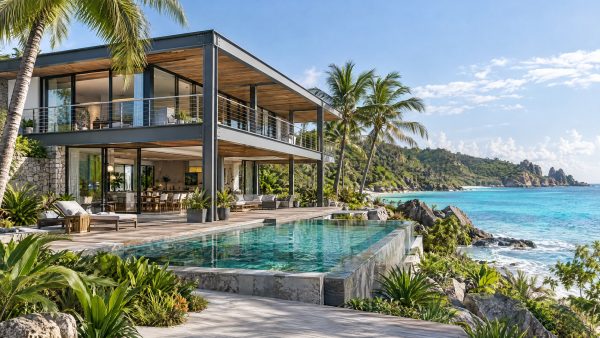
Designed for the destination: modern steel buildings engineered for island and coastal environments.
9. From El Niño to the Future of Island Construction
The 2026 El Niño event is not simply another weather story.
It is part of a larger conversation about how infrastructure should respond to changing environmental risks.
WMO’s latest outlook indicates that El Niño is expected to continue influencing temperature and rainfall patterns into early 2027.
For island nations and coastal communities, this raises an important question:
Are we still building only for today’s conditions?
Or are we building for the conditions a building may experience over the next 20, 30 or 50 years?
The answer can influence everything from material selection to structural design and corrosion protection.
10. Island Steel: Building for Wind, Salt and the Future
At Island Steel, our focus is not simply exporting steel components.
Our focus is providing prefabricated steel structure solutions for island and coastal environments.
We pay particular attention to:
Wind-Proofing
Structural systems designed with wind loads, connections and anchoring in mind.
Anti-Corrosion
Protection strategies designed around humid and marine environments.
Material Verification
Checking actual materials and components rather than relying only on appearance or paperwork.
Connection Quality
High-strength bolts, anchor bolts and connection components are treated as critical parts of the structural system.
Factory Quality Control
Inspection before products are packed and shipped overseas.
Prefabricated Construction
Manufacturing major components in the factory before transportation to the project location.
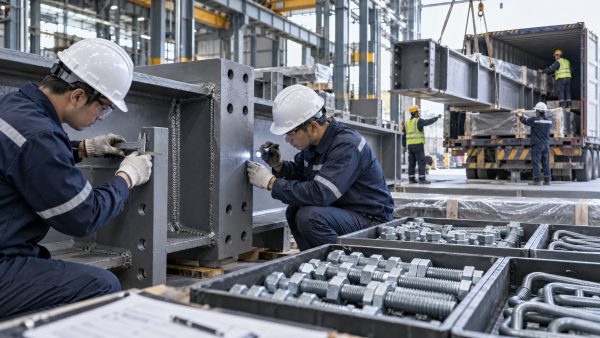
Quality starts in the factory — long before the steel structure reaches the island.
11. The Real Lesson of Super El Niño 2026
The biggest lesson may not be about El Niño itself.
It is about preparedness.
Climate conditions can change.
Storm patterns can change.
Rainfall can change.
Coastal environments can become more demanding.
But a building can be designed with these challenges in mind.
For island and coastal construction, this means thinking beyond the appearance of the finished building.
It means asking:
Can the structure withstand the expected wind loads?
Can the materials handle the local environment?
Are the connections reliable?
Is corrosion protection appropriate?
Can the building be efficiently manufactured, shipped and installed?
These are the questions that turn a building from simply “prefabricated” into a climate-conscious building solution.
Stronger Buildings. Safer Islands.
The strengthening 2026 El Niño is another reminder that environmental conditions should be considered before construction begins — especially for island and coastal projects.
For these environments, wind-proofing and anti-corrosion protection are not just selling points. They are fundamental considerations for long-term building performance.
At Island Steel, we believe that quality begins with every component.
From the main steel frame to the smallest bolt.
From material verification to surface treatment.
From factory inspection to container loading.
Every component matters.
Every batch matters.
Every project matters.
Island Steel
Professional Prefabricated Steel Structure Solutions for Island & Coastal Environments.
Planning an island, coastal or hurricane/cyclone-prone project?
Send us your site plan, architectural drawings or preliminary layout.
Our team can review the project requirements and discuss a suitable steel structure solution for your location.
FAQ
What is the impact of El Niño 2026 on island and coastal buildings?
El Niño can influence global temperature, rainfall and regional weather patterns. For island and coastal buildings, project owners should consider potential risks such as extreme heat, heavy rainfall, flooding and changing storm conditions. Proper structural design, wind-load calculations and corrosion protection can help improve building resilience.
How can steel structure buildings be designed for strong winds, cyclones and hurricanes?
Wind-resistant steel buildings require more than strong steel members. The design should consider local wind speeds, design wind pressures, roof uplift, structural bracing, connection strength, anchor bolts and foundation anchoring. Island Steel can develop project-specific steel structure solutions based on the location, drawings and applicable design requirements.
How do you protect steel structures from corrosion in coastal areas?
Coastal steel structures need corrosion protection suited to their exposure conditions, including humidity, salt spray and distance from the sea. Depending on the project, protection options may include hot-dip galvanizing, suitable protective coatings and Dacromet treatment for applicable components. The right system should be selected according to the component, project specifications and expected service environment.
How can I get a quotation for a coastal steel structure project?
To receive a project-specific quotation from Island Steel, please provide your project location, architectural drawings or preliminary layout, building dimensions, intended use and any known wind-load or corrosion-protection requirements. Our team can review your information and discuss a suitable prefabricated steel structure solution for your project.


 October 09, 2026