La qualité d'un projet de structure en acier préfabriquée ne se limite pas à l'ossature principale. Elle commence par chaque composant, un par un.
Pour un bâtiment insulaire ou côtier, la sécurité structurelle et la durabilité dépendent de milliers de composants individuels travaillant ensemble. Les colonnes en acier, les poutres, les plaques de connexion, les boulons d'ancrage et les boulons à haute résistance jouent tous un rôle important dans la structure finale.
Chez Island Steel, nous pensons que même le plus petit composant mérite la même attention que l'ossature structurelle principale.
Récemment, notre équipe s'est rendue à l'usine pour une inspection sur site des les boulons d'ancrage et les boulons haute résistance à serrage contrôlé de qualité 10.9, y compris les produits traités avec un revêtement par pulvérisation et une protection anticorrosion Dacromet.
Cette inspection s'est concentrée particulièrement sur deux domaines :
1. Vérification des matériaux — notre priorité principale
2. Échantillonnage de la quantité par lot — garantir la cohérence et l'exhaustivité
Pour nous, il ne s'agit pas simplement d'une inspection d'usine de routine. Cela fait partie de notre engagement à fournir des Structure en acier solutions fiables pour les environnements insulaires et côtiers exigeants.
1. Inspection des produits réels avant expédition
La première étape consiste à inspecter les produits réels préparés pour le projet.
Les boulons à haute résistance présentés ci-dessous sont des boulons à serrage contrôlé haute résistance Grade 10.9, avec traitement de surface Dacromet.
Les étiquettes des produits permettent à notre équipe d'inspection de vérifier des informations importantes telles que le type de produit, la spécification, la quantité et la date de production.
-e1790672243635.jpg)
Photo 1 — Boulons à serrage contrôlé haute résistance de grade 10.9 avec traitement Dacromet préparés pour l'inspection.
Plutôt que de vérifier uniquement l'apparence externe, nous poursuivons avec une étape plus importante : la vérification du matériau.
2. Essais des matériaux : la partie la plus importante de notre inspection
Un boulon peut sembler tout à fait normal de l'extérieur.
Mais l'apparence seule ne peut pas nous dire si le matériau répond à la spécification requise.
Pour les composants structurels, la véritable des matériaux déterminer leurs performances mécaniques, leur résistance à la corrosion et leur adéquation à l’application prévue.
C’est pourquoi les essais de matériaux constituent l’une des étapes les plus importantes de notre processus d’inspection en usine.
Au cours de l’inspection, notre équipe a effectué des contrôles ponctuels sur des composants métalliques échantillonnés à l’aide d’un analyseur d’alliages portable.
L’analyseur peut identifier la composition élémentaire du matériau testé, ce qui permet à notre équipe de vérifier si le matériau est conforme aux spécifications requises.
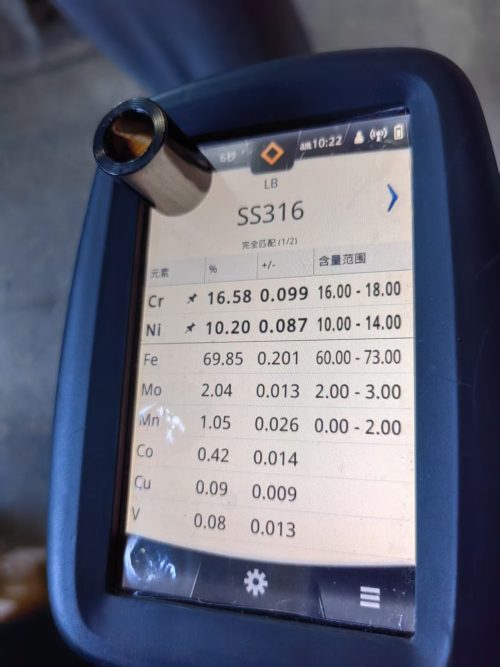
Photo 2 — Analyse sur site de la composition du matériau à l’aide d’un analyseur d’alliages portable.
Dans le relevé d’inspection présenté ci-dessus, l’analyseur identifie l’échantillon testé comme étant de l’ SS316, la composition élémentaire affichée comprenant notamment du chrome, du nickel et du molybdène.
This type of testing gives us a much more direct understanding of the actual material being supplied.
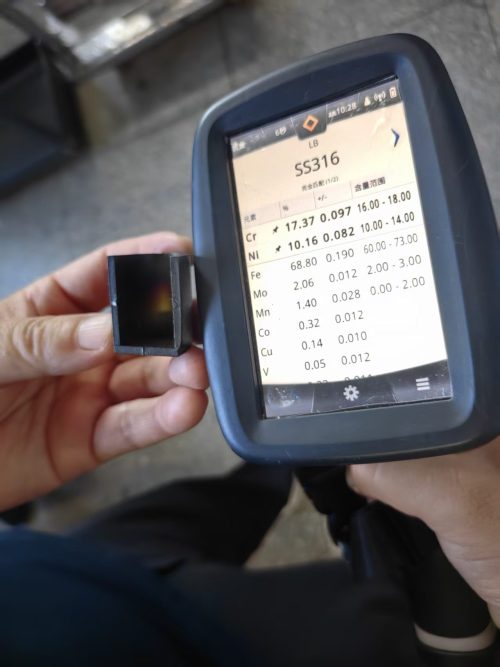
Photo 3 — Material composition result displayed during the factory inspection.
For Island Steel, this is an important principle:
We do not only inspect what the component looks like. We inspect what the component is made of.
3. Why Material Quality Matters for Island Projects
For ordinary inland projects, environmental exposure can already affect steel components over time.
For island and coastal projects, the challenge is greater.
High humidity, salt-laden air, sea spray and tropical weather can accelerate corrosion. At the same time, buildings may be exposed to strong tropical storms, cyclones and hurricane-force winds.
Therefore, two factors are particularly important for island construction:
Protection anticorrosion
Résistance au vent
These two requirements influence the design, materials, connections and protective treatment of the entire building system.
A high-strength bolt is not simply a fastener.
It is part of the connection system that transfers structural loads.
An anchor bolt is not simply a piece of threaded steel.
It connects the steel structure to the foundation and plays an important role in transferring structural forces into the foundation.
This is why material verification at the factory stage matters.
4. Batch Quantity Sampling: Checking More Than the Numbers on Paper
After material verification, we also carry out batch quantity sampling.
For every batch, our inspection team checks the actual quantity of products prepared for shipment.
Ceci est particulièrement important pour Prefabricated Steel Structure projects because components are manufactured and packed according to the construction and installation requirements of the project.
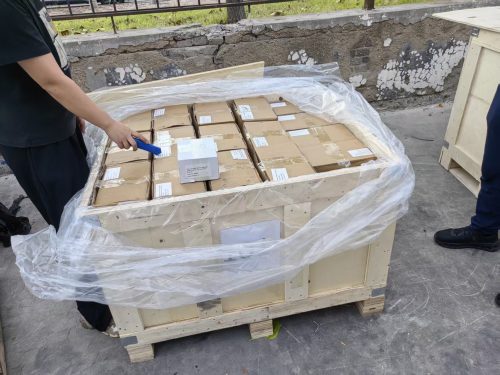
Photo 4 — Batch quantity sampling and product identification before shipment.
Our objective is simple:
The products supplied must correspond with the project requirements not only in specification, but also in quantity.
A missing connection component may seem like a small issue, but on an overseas island project, replacing a small part after shipment can cause unnecessary delays and additional logistics costs.
Therefore, we prefer to identify potential problems before the goods leave the factory.
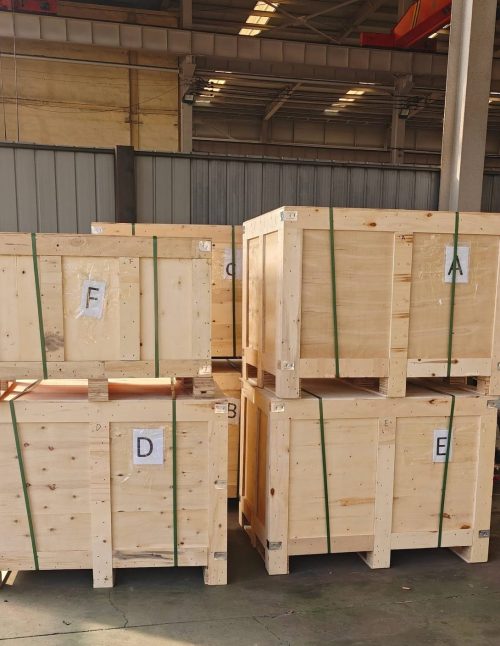
5. Careful Packaging Is Also Part of Quality Control
Inspection does not end after testing.
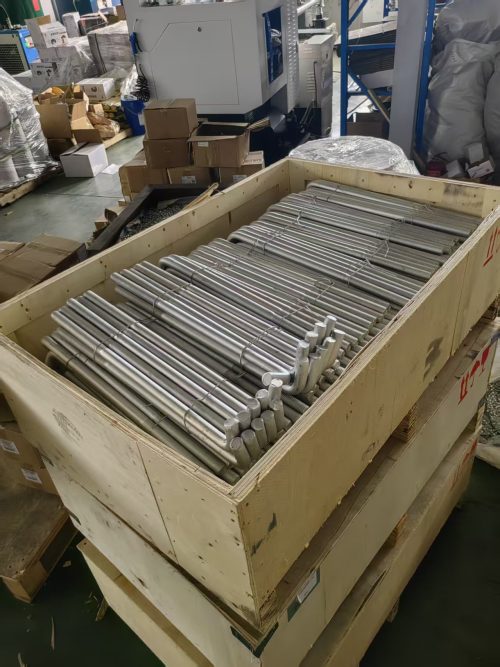
Once the products have passed inspection, proper packaging becomes another important step.
For international transportation, especially transportation to remote island markets, components may experience long-distance sea freight, repeated handling and changing environmental conditions.
The products therefore need to be properly protected and clearly identified before shipment.
6. Anti-Corrosion Protection for Coastal and Island Environments
The products inspected during this factory visit also received spray coating and Dacromet treatment for corrosion protection.
For island construction, corrosion resistance is not a decorative consideration.
It is a long-term performance requirement.
Salt spray, humidity and marine environments can create significantly more demanding conditions for steel components.
That is why Island Steel pays close attention to the protective treatment of steel components and connection hardware.
Notre Protection anticorrosion approach is considered together with the actual project environment, structural requirements and expected service conditions.
For coastal and island buildings, we pay particular attention to:
- Salt-laden marine environments
- High humidity
- Tropical rainfall
- Coastal exposure
- Long-term corrosion protection
- Connection and anchoring components
- Steel surface treatment
7. Wind-Proofing Starts with Reliable Connections
For island countries, corrosion is only one part of the challenge.
Strong winds are another critical consideration.
During tropical storms, cyclones or hurricanes, wind loads are transferred through the building’s structural system.
The roof transfers loads to the steel frame.
The steel frame transfers loads through beams and columns.
The columns transfer forces toward the foundation.
And the connection system—including high-strength bolts and anchor bolts—plays an essential role throughout this load-transfer path.
This is why Résistance au vent cannot be considered only at the roof or wall level.
It must be considered as part of the complete structural system.
A professional Structure en acier solution therefore requires not only strong steel members, but also reliable materials and properly controlled connections.
A large steel building may look impressive when completed.
But behind that building are thousands of individual components.
A column depends on its connection.
A connection depends on its bolts.
The steel frame depends on its anchoring system.
And the long-term durability of those components depends on the quality of their des matériaux and protective treatment.
This is why Island Steel does not separate “large components” from “small components” when it comes to quality control.
A small bolt may be small in size, but its responsibility can be significant.
For an international project, especially a remote island project, we believe that problems should be identified at the factory—not after the container arrives at the construction site.
9. Island Steel: Built Around the Needs of Island Environments
With our focus on island and coastal markets, Island Steel understands that a building needs to perform in the environment where it will ultimately be used.
Our engineering and production approach places particular attention on:
Structural Strength
Résistance au vent
Anti-corrosion Protection
Material Verification
Connection Quality
Manufacturing Accuracy
From the main Structure en acier to the smallest connection component, every part contributes to the final building.
Our goal is not simply to manufacture and export a Préfabriqués building.
Our goal is to deliver a structural system that is properly considered for the challenges of its destination environment.
Quality Starts with the Smallest Component
This factory inspection is a good example of how we approach quality at Island Steel.
We inspected the actual products.
We verified materials through on-site sampling.
We checked batch quantities.
We reviewed surface treatment.
We inspected packaging before shipment.
Because for us, quality does not begin when the finished building appears on site.
Quality begins with the first material entering production—and continues down to the smallest bolt.
For island and coastal projects, where Protection anticorrosion and Résistance au vent are fundamental requirements, this attention to detail is especially important.
Island Steel — Professional Prefabricated Steel Structure Solutions for Island & Coastal Environments.
Every component matters. Every batch matters. Every project matters.
FAQ
1. Pourquoi Island Steel inspecte-t-elle des petits composants tels que les boulons ?
Parce que chaque composant contribue à la sécurité et à la durabilité d'une structure métallique. Chez Island Steel, même les plus petits éléments de connexion sont considérés comme une partie importante du bâtiment final.
2. Sur quoi Island Steel se concentre-t-elle lors de l'inspection en usine ?
Notre priorité est la vérification des matériaux, suivie de l'échantillonnage par lot. Nous contrôlons également les spécifications du produit, le traitement de surface et l'emballage avant l'expédition.
3. Pourquoi le contrôle des matériaux est-il important pour les boulons de structure en acier ?
Les propriétés des matériaux affectent directement la résistance, la fiabilité et la durée de vie des composants structurels. Nous effectuons des tests ponctuels sur les matériaux afin de vérifier la composition réelle et la cohérence des matériaux fournis.
4. Comment Island Steel contrôle-t-il la quantité de chaque lot ?
Nous effectuons un échantillonnage quantitatif par lot avant l'expédition afin de garantir que les produits réels et les quantités correspondent aux exigences du projet.
5. Pourquoi la protection anticorrosion est-elle importante pour les projets insulaires ?
5. Pourquoi la protection anticorrosion est-elle importante pour les projets insulaires ?
6. Comment la qualité des boulons contribue-t-elle à la résistance au vent ?
Les boulons d'ancrage et les boulons haute résistance sont des éléments essentiels du système de connexion structurelle. Des matériaux et des connexions fiables permettent de transférer en toute sécurité les charges de vent à travers la structure en acier jusqu'aux fondations.


 29 septembre 2026