إن الجودة في مشروع الهيكل الفولاذي الجاهز لا تتعلق بالإطار الرئيسي فقط. بل تبدأ من كل مكوّن على حدة.
بالنسبة لمبنى جزري أو ساحلي، تعتمد السلامة الإنشائية والمتانة على تكامل عمل آلاف المكوّنات الفردية معًا. تلعب الأعمدة الفولاذية والعوارض وصفائح الوصل ومسامير التثبيت والمسامير عالية القوة جميعها دورًا مهمًا في الهيكل النهائي.
في صلب الجزر, ، نؤمن بأن أصغر مكوّن يستحق نفس الاهتمام الذي يحظى به الإطار الإنشائي الرئيسي.
مؤخرًا، قام فريقنا بزيارة المصنع لإجراء فحص ميداني على مسامير التثبيت ومسامير الاحتكاك عالية القوة من الدرجة 10.9, ، بما في ذلك المنتجات المعالجة بـ طلاء بالرش والحماية من التآكل بطلاء الداكروميت.
ركز هذا الفحص بشكل خاص على مجالين:
1. Material verification — our primary focus
2. Batch quantity sampling — ensuring consistency and completeness
For us, this is not simply a routine factory inspection. It is part of our commitment to delivering reliable هيكل فولاذي solutions for demanding island and coastal environments.
1. Inspecting the Actual Products Before Shipment
The first step is to inspect the actual products prepared for the project.
The high-strength bolts shown below are Grade 10.9 high-strength friction grip bolts, with Dacromet surface treatment.
The product labels allow our inspection team to verify important information such as the product type, specification, quantity and production date.
-e1790672243635.jpg)
Photo 1 — Grade 10.9 high-strength friction grip bolts with Dacromet treatment prepared for inspection.
Rather than checking only the external appearance, we continue with a more important step: material verification.
2. Material Testing: The Most Important Part of Our Inspection
A bolt may look completely normal from the outside.
But appearance alone cannot tell us whether the material meets the required specification.
For structural components, the actual المواد determine their mechanical performance, corrosion resistance and suitability for the intended application.
That is why material testing is one of the most important parts of our factory inspection process.
During the inspection, our team carried out spot testing on sampled metal components using a portable alloy analyzer.
The analyzer can identify the elemental composition of the tested material, allowing our team to verify whether the material corresponds with the required specification.
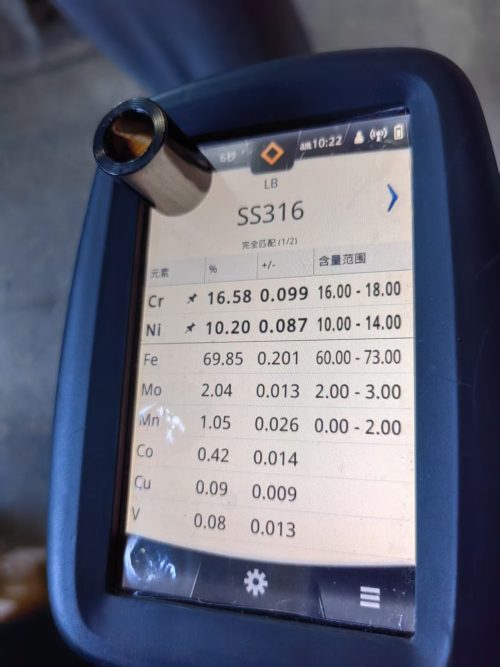
Photo 2 — On-site material composition testing using a portable alloy analyzer.
In the inspection record shown above, the analyzer identifies the tested sample as SS316, with the displayed elemental composition including chromium, nickel and molybdenum.
This type of testing gives us a much more direct understanding of the actual material being supplied.
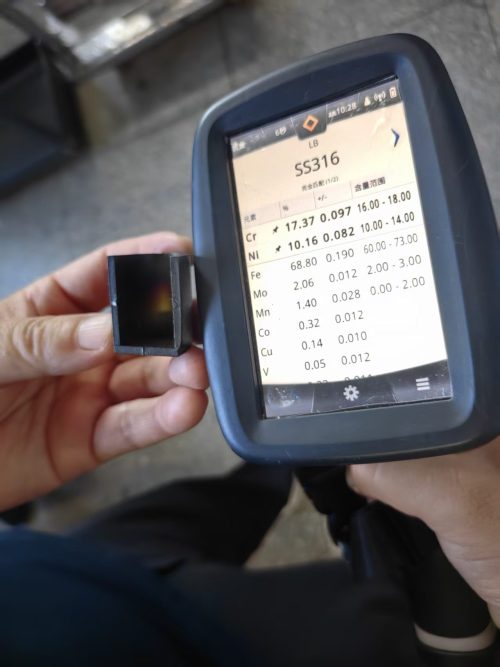
Photo 3 — Material composition result displayed during the factory inspection.
For Island Steel, this is an important principle:
We do not only inspect what the component looks like. We inspect what the component is made of.
3. Why Material Quality Matters for Island Projects
For ordinary inland projects, environmental exposure can already affect steel components over time.
For island and coastal projects, the challenge is greater.
High humidity, salt-laden air, sea spray and tropical weather can accelerate corrosion. At the same time, buildings may be exposed to strong tropical storms, cyclones and hurricane-force winds.
Therefore, two factors are particularly important for island construction:
Anti-corrosion
Wind-proofing
These two requirements influence the design, materials, connections and protective treatment of the entire building system.
A high-strength bolt is not simply a fastener.
It is part of the connection system that transfers structural loads.
An anchor bolt is not simply a piece of threaded steel.
It connects the steel structure to the foundation and plays an important role in transferring structural forces into the foundation.
This is why material verification at the factory stage matters.
4. Batch Quantity Sampling: Checking More Than the Numbers on Paper
After material verification, we also carry out batch quantity sampling.
For every batch, our inspection team checks the actual quantity of products prepared for shipment.
وهذا مهم بشكل خاص بالنسبة إلى Prefabricated Steel Structure projects because components are manufactured and packed according to the construction and installation requirements of the project.
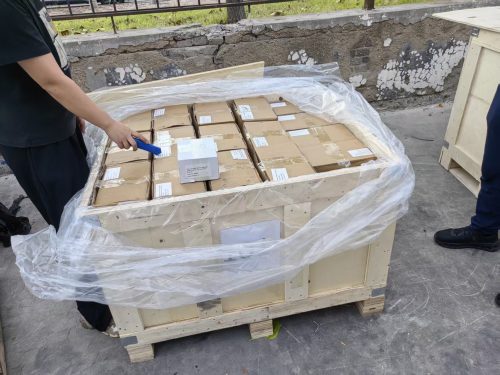
Photo 4 — Batch quantity sampling and product identification before shipment.
Our objective is simple:
The products supplied must correspond with the project requirements not only in specification, but also in quantity.
A missing connection component may seem like a small issue, but on an overseas island project, replacing a small part after shipment can cause unnecessary delays and additional logistics costs.
Therefore, we prefer to identify potential problems before the goods leave the factory.
5. Careful Packaging Is Also Part of Quality Control
Inspection does not end after testing.
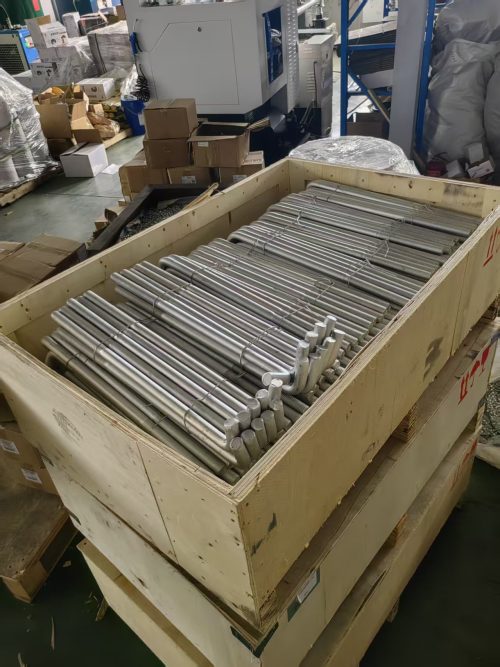
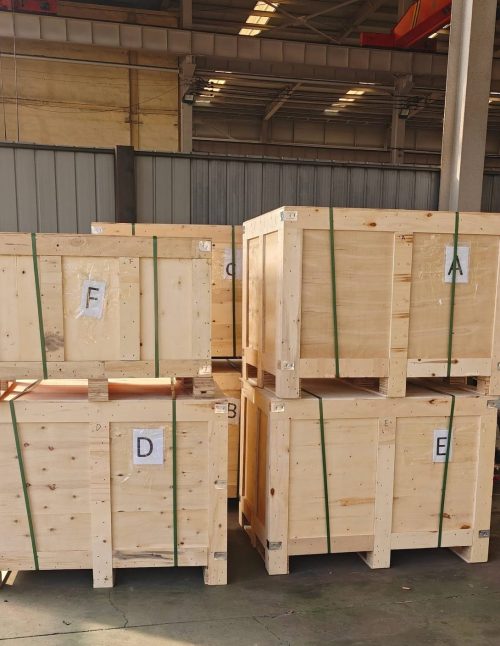
Once the products have passed inspection, proper packaging becomes another important step.
For international transportation, especially transportation to remote island markets, components may experience long-distance sea freight, repeated handling and changing environmental conditions.
The products therefore need to be properly protected and clearly identified before shipment.
6. Anti-Corrosion Protection for Coastal and Island Environments
The products inspected during this factory visit also received spray coating and Dacromet treatment for corrosion protection.
For island construction, corrosion resistance is not a decorative consideration.
It is a long-term performance requirement.
Salt spray, humidity and marine environments can create significantly more demanding conditions for steel components.
That is why Island Steel pays close attention to the protective treatment of steel components and connection hardware.
سيتبع Anti-corrosion approach is considered together with the actual project environment, structural requirements and expected service conditions.
For coastal and island buildings, we pay particular attention to:
- Salt-laden marine environments
- High humidity
- Tropical rainfall
- Coastal exposure
- Long-term corrosion protection
- Connection and anchoring components
- Steel surface treatment
7. Wind-Proofing Starts with Reliable Connections
For island countries, corrosion is only one part of the challenge.
Strong winds are another critical consideration.
During tropical storms, cyclones or hurricanes, wind loads are transferred through the building’s structural system.
The roof transfers loads to the steel frame.
The steel frame transfers loads through beams and columns.
The columns transfer forces toward the foundation.
And the connection system—including high-strength bolts and anchor bolts—plays an essential role throughout this load-transfer path.
This is why Wind-proofing cannot be considered only at the roof or wall level.
It must be considered as part of the complete structural system.
A professional هيكل فولاذي solution therefore requires not only strong steel members, but also reliable materials and properly controlled connections.
A large steel building may look impressive when completed.
But behind that building are thousands of individual components.
A column depends on its connection.
A connection depends on its bolts.
The steel frame depends on its anchoring system.
And the long-term durability of those components depends on the quality of their المواد and protective treatment.
This is why Island Steel does not separate “large components” from “small components” when it comes to quality control.
A small bolt may be small in size, but its responsibility can be significant.
For an international project, especially a remote island project, we believe that problems should be identified at the factory—not after the container arrives at the construction site.
9. Island Steel: Built Around the Needs of Island Environments
With our focus on island and coastal markets, Island Steel understands that a building needs to perform in the environment where it will ultimately be used.
Our engineering and production approach places particular attention on:
Structural Strength
Wind-proofing
Anti-corrosion Protection
Material Verification
Connection Quality
Manufacturing Accuracy
From the main هيكل فولاذي to the smallest connection component, every part contributes to the final building.
Our goal is not simply to manufacture and export a مبانٍ building.
Our goal is to deliver a structural system that is properly considered for the challenges of its destination environment.
Quality Starts with the Smallest Component
This factory inspection is a good example of how we approach quality at Island Steel.
We inspected the actual products.
We verified materials through on-site sampling.
We checked batch quantities.
We reviewed surface treatment.
We inspected packaging before shipment.
Because for us, quality does not begin when the finished building appears on site.
Quality begins with the first material entering production—and continues down to the smallest bolt.
For island and coastal projects, where Anti-corrosion and Wind-proofing are fundamental requirements, this attention to detail is especially important.
Island Steel — Professional Prefabricated Steel Structure Solutions for Island & Coastal Environments.
Every component matters. Every batch matters. Every project matters.
الأسئلة الشائعة
1. لماذا تقوم Island Steel بفحص المكونات الصغيرة مثل البراغي؟
لأن كل مكون يساهم في سلامة ومتانة الهيكل الفولاذي. في Island Steel، حتى أصغر مكونات التوصيل تُعامَل كجزء مهم من المبنى النهائي.
2. على ماذا تركز Island Steel خلال الفحص في المصنع؟
تركيزنا الأساسي هو التحقق من المواد، يليه أخذ عينات من كمية الدفعة. كما نتحقق من مواصفات المنتج، والمعالجة السطحية، والتعبئة قبل الشحن.
3. لماذا يُعد اختبار المواد مهمًا لبراغي الهيكل الفولاذي؟
تؤثر خصائص المواد بشكل مباشر على قوة العناصر الهيكلية وموثوقيتها وعمرها التشغيلي. نقوم بإجراء اختبارات عينية للمواد للتحقق من التركيب الفعلي واتساق المواد الموردة.
4. كيف تتحكم شركة Island Steel في كمية كل دفعة؟
نقوم بإجراء أخذ عينات لفحص الكمية على أساس كل دفعة قبل الشحن للتأكد من أن المنتجات والكميات الفعلية تتوافق مع متطلبات المشروع.
5. Why is Anti-corrosion protection important for island projects?
5. Why is Anti-corrosion protection important for island projects?
6. How does bolt quality contribute to Wind-proofing?
Anchor bolts and high-strength bolts are critical parts of the structural connection system. Reliable materials and connections help transfer wind loads safely through the Steel Structure and into the foundation.


 29 سبتمبر 2026